
Grand Canyon guide
Stargazing Near the Grand Canyon
The other half of the canyon comes out at night.
By Lex, founder of Stargazing. We own three tiny homes in Valle. We built them to look up.
The short answer: The Grand Canyon is one of the darkest places to see stars in the United States, and the park is a certified International Dark Sky Park. You can stargaze from any South Rim viewpoint away from the village lights, or stay outside the park in Valle, about 35 minutes from the South Rim entrance, where the sky is dark right outside your door. For the best view, go on a night near the new moon.
Most visitors leave the rim at sunset and miss the second show. Here is where to watch it, when to go, and how to make it part of the trip instead of a late night extra.
Is the Grand Canyon a dark sky park?
Officially dark.
Yes. Grand Canyon National Park was certified as an International Dark Sky Park in 2019. To earn it, the park changed most of its outdoor lights so they point down and glow warm instead of bright white. The result is a sky where, on a clear moonless night, you can see the Milky Way with your own eyes.
The dark does not stop at the park boundary. The high desert south of the canyon has very few towns and very little light, and northern Arizona has worked for decades to keep its skies dark.
Official source: NPS night skies at Grand Canyon (opens in a new tab).
Where to stargaze near the South Rim
Away from the lights.
There are two good ways to do it.
On the rim.
Any South Rim viewpoint works once you walk away from Grand Canyon Village and the parking lot lights. Give your eyes about 20 minutes to adjust. Use a red light, not your phone screen.
Outside the park, in Valle.
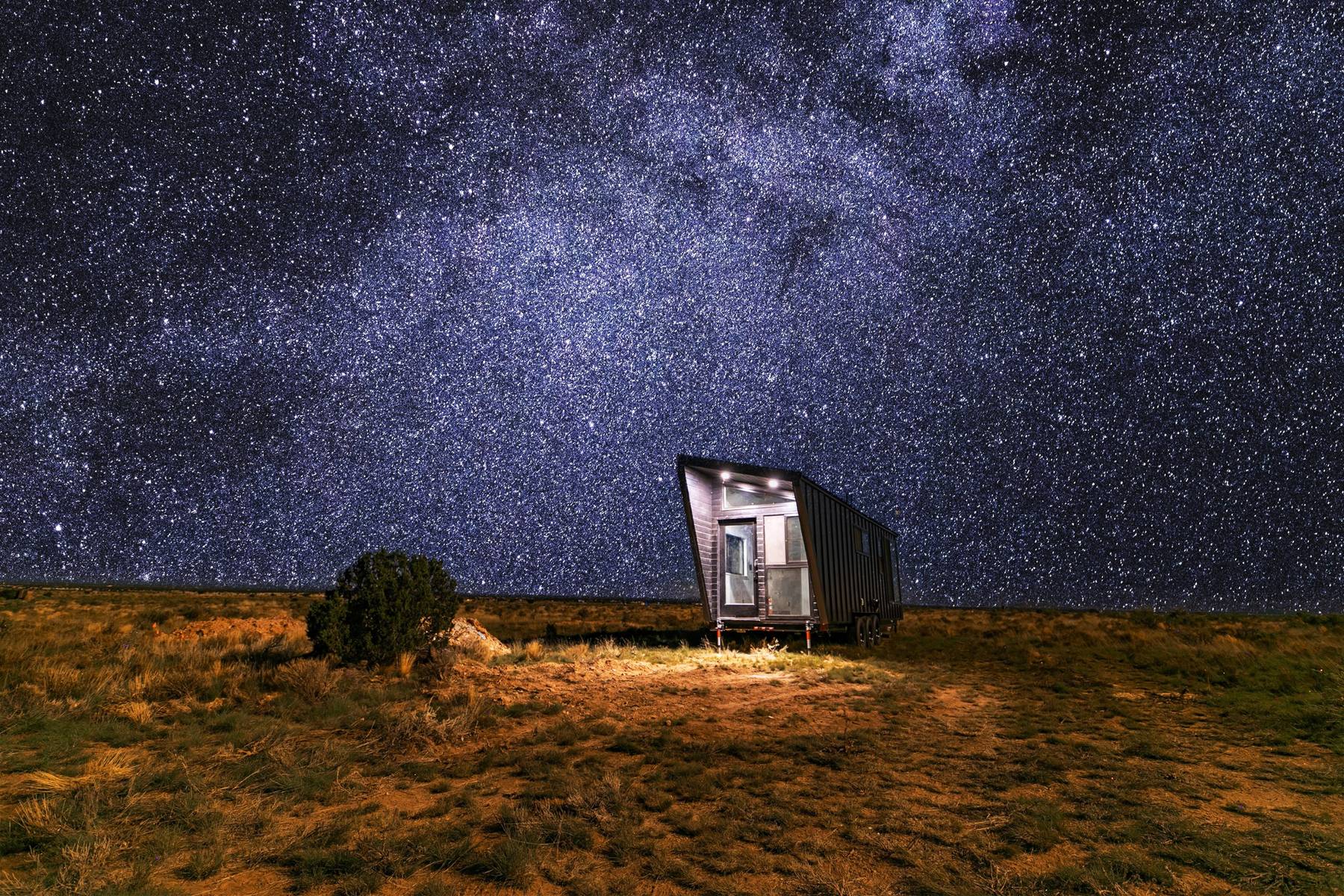
Valle is a small crossroads on open grassland where Highway 64 meets Highway 180. No main street, no big buildings, almost no light at night. You do not have to drive anywhere or stand in a lot. You step outside, or you look up from bed.
| Topic | On the South Rim | In Valle |
|---|---|---|
| Sky | Very dark away from the village | Very dark, right outside the door |
| Crowds | Other visitors at popular viewpoints | Just you |
| Comfort | Standing or sitting in the cold | Your own deck, or your own bed |
| Getting there | Drive in, park, walk out | You are already there |
When to see the stars
Pick the night, not just the day.
The moon matters most. The darkest nights are the few days on either side of a new moon. Near a full moon, the canyon glows but most stars wash out. Use the Night Sky Planner on this page to pick your dates.
Milky Way season. The bright center of the Milky Way rises in spring and is best from about May to September, high in the sky after dark. From roughly November to February the center is below the horizon after dark, but winter nights are long and clear, with Orion and the bright winter stars.
Time of night. The sky is fully dark about an hour and a half after sunset. Summer stargazing starts late; winter stargazing starts early, often right after dinner.
Cold nights. The high desert gets cold after dark in every season. Bring a warm layer even in summer.
See the sky for any night
Drag across the next year, or type your trip dates. For each night you get the moon, the hours of real darkness, the Milky Way, the bright planets and any meteor shower.
Night Sky Planner
Loading the sky over Valle, Arizona
A simple night plan
Sunset on the rim. Stars from bed.
- Watch sunset from the South Rim.
- Drive back to Valle, about 35 minutes. Go slow on the dark highway and watch for wildlife.
- Sit out on the deck while the sky goes from blue to black.
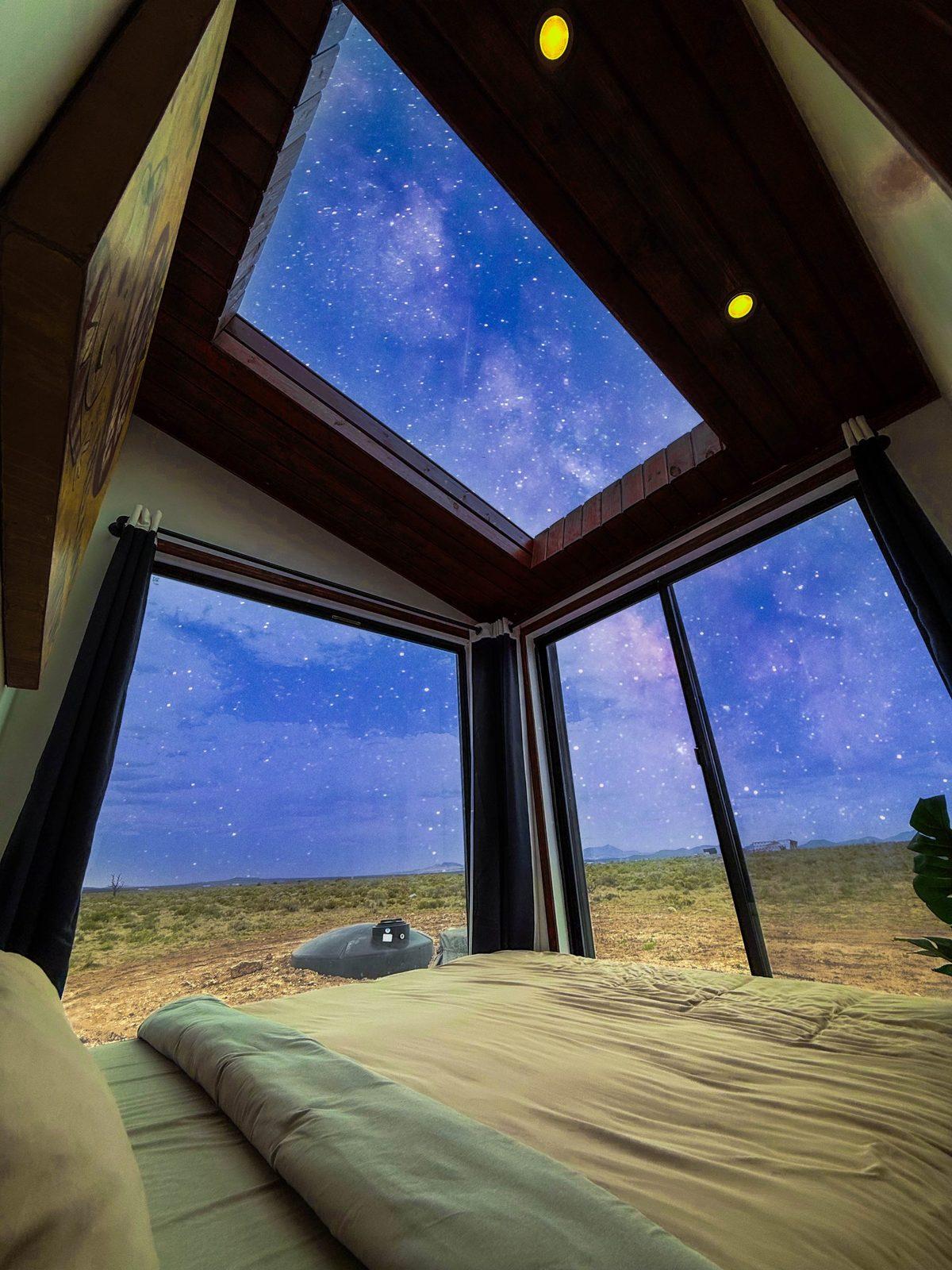
- Fall asleep looking up through the skylight.
No tour, no alarm, no parking lot.
The Grand Canyon Star Party
A week of telescopes, every June.
Every June the park hosts the Grand Canyon Star Party at the South Rim. Amateur astronomers set up telescopes behind the Visitor Center, and rangers and guests give talks at night. It is free with your park entrance. Dates change each year, so check the NPS page (opens in a new tab) before you plan around it.
Stargazing from a tiny home
Built to look up.
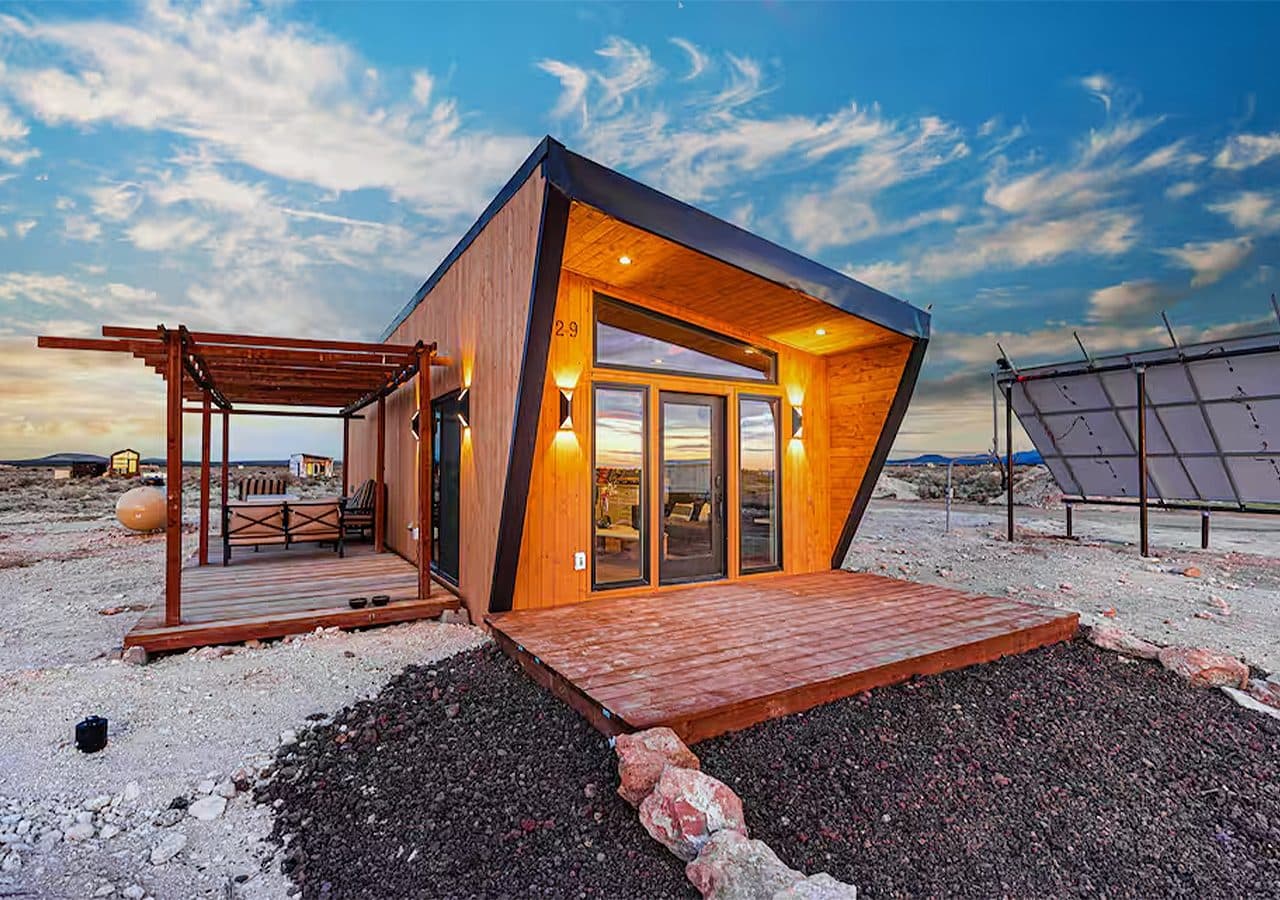
Stargazing is three off-grid tiny homes in Valle: Venus, Luna and Jupiter. We built them for one purpose: to sleep under the stars near the Grand Canyon.
Each one has a skylight over the bed, a deck and a fire pit. Fire rules change with the season, so check the current Coconino County fire restrictions (opens in a new tab). Each sleeps up to 4 guests.
Spend the day at the canyon. Come back about 35 minutes. Turn off the lights.
Common questions
Where is the best place to stargaze near the Grand Canyon?
Anywhere away from lights. On the South Rim, walk away from Grand Canyon Village to a quiet viewpoint. Outside the park, Valle, about 35 minutes from the South Rim entrance, has open land and almost no light, so the sky is dark right outside your door.
Is the Grand Canyon a dark sky park?
Yes. Grand Canyon National Park is a certified International Dark Sky Park. Most of its outdoor lights point down and glow warm to keep the sky dark.
Can you see the Milky Way at the Grand Canyon?
Yes, on clear nights near the new moon. The bright center of the Milky Way is best from about May to September, a couple of hours after sunset.
When is the best time to stargaze at the Grand Canyon?
On the few nights around a new moon, about an hour and a half after sunset or later. Spring through early fall for the Milky Way; winter for long, clear nights.
Do you need a tour to stargaze at the Grand Canyon?
No. Your eyes are enough. Give them about 20 minutes in the dark and use a red light. Binoculars help. For telescopes, visit during the Grand Canyon Star Party in June.
Where can you see the stars from bed near the Grand Canyon?
Stargazing's three tiny homes in Valle each have a skylight over the bed, about 35 minutes from the South Rim entrance.
How far is Valle from the Grand Canyon?
About 35 minutes by car to the South Rim entrance.
Disconnect to Reconnect.
Book direct and save 5% on the nightly rate.
See our Valle homesNot sure where to stay? Read our guide to where to stay near the Grand Canyon South Rim.
Official sources
- National Park Service: night skies at Grand Canyon (opens in a new tab)
- National Park Service: Grand Canyon Star Party (opens in a new tab)
- DarkSky International: Grand Canyon certification (opens in a new tab)
- Coconino County: fire restrictions (opens in a new tab)
- American Meteor Society: meteor shower calendar (opens in a new tab)